
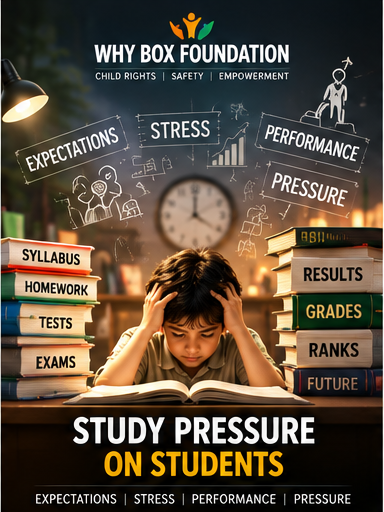
The Weight of Academic Expectations
Study pressure is one of the most significant stressors in a student's life. With relentless expectations from parents, teachers, and society, many children feel like they are drowning in a sea of textbooks, exams, and competition. The pressure to perform academically has reached unprecedented levels, affecting students' mental and physical health.
★ "Your grades do not define your worth. You are more than a test score."
📖 What Is Study Pressure?
Study pressure is the overwhelming feeling of anxiety, stress, and fear associated with academic performance. It manifests as:
- Constant fear of failure that prevents students from enjoying learning.
- Inability to relax or enjoy leisure time without feeling guilty.
- Physical symptoms like headaches, fatigue, and insomnia from chronic stress.
- Loss of interest in learning for the sake of learning — education becomes purely transactional.
📊 The Pressure to Perform
Students are constantly asked to explain and justify their academic performance. This constant pressure to "perform" makes them feel like they are on trial. The emphasis on grades and rankings takes the joy out of learning and turns education into a stressful obligation.
😰 The Impact of Stress
Chronic study stress can have severe consequences on a child's mental and physical health:
- Mental health issues: Anxiety disorders, depression, and academic burnout.
- Physical health: Headaches, stomach issues, weakened immunity, and sleep disorders.
- Academic decline: Ironically, stress reduces cognitive performance, leading to worse grades.
- Loss of passion: Students lose curiosity and creativity when learning becomes purely transactional.
- Relationship strain: Stress affects relationships with family and friends.
💪 How to Cope with Study Pressure
Students, parents, and educators can work together to reduce study pressure:
- Adopt a growth mindset: Focus on learning and improvement rather than just grades.
- Take regular breaks: Regular intervals of rest and physical activity boost productivity and mental well-being.
- Talk to someone: Sharing your feelings with friends, family, or counselors reduces the burden.
- Set realistic goals: Break big tasks into smaller, manageable steps to avoid overwhelm.
- Practice self-care: Adequate sleep, healthy eating, and exercise are essential for academic success.
🛡️ Our Role at WHY BOX FOUNDATION
We provide counseling and stress-management workshops to help students cope with academic pressure. We also work with schools and parents to create healthier learning environments that prioritize well-being over performance.
★ Remember: Your grades do not define your worth. You are more than a test score. Your health, happiness, and growth matter most. Learning is a journey, not a destination.