
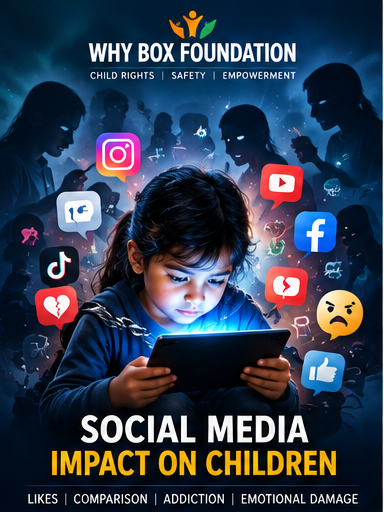
The Double-Edged Sword of Social Media
Social media platforms like Instagram, YouTube, Snapchat, and TikTok have transformed how children communicate, express themselves, and perceive the world. While these platforms can be creative and empowering, they also carry significant risks to mental health and emotional well-being. The average child spends over 3-4 hours daily on social media, and this exposure is shaping their development in profound ways.
★ "Social media is a highlight reel, not a reality. Your real life is infinitely more valuable."
❤️ The Pursuit of Likes
For many children, social media has become a validation machine. The number of likes, shares, and comments directly influences their sense of self-worth. When a post doesn't perform well, it can lead to feelings of rejection and inadequacy. This constant need for external validation creates an unhealthy dependency on digital approval, making children's self-esteem fragile and externally driven.
⚖️ The Trap of Comparison
Social media showcases curated, filtered, and often unrealistic versions of other people's lives. Children compare their own lives — with all their struggles and imperfections — to these highlight reels. This comparison trap leads to:
- Envy and resentment toward others who seem to have "perfect" lives.
- Body image issues and low self-esteem, especially among teenage girls.
- Feelings of inadequacy and failure when their lives don't measure up.
- Depression and anxiety from constant social comparison.
🌀 The Addiction Loop
Social media platforms are designed to be addictive. They use sophisticated algorithms that feed children endless content, keeping them scrolling for hours. The intermittent rewards (likes, notifications, new content) trigger dopamine releases in the brain, creating a cycle of dependency that is difficult to break. This addiction affects productivity, sleep, and real-world relationships.
💔 Emotional Damage
Beyond addiction and comparison, social media exposes children to cyberbullying, online predators, and harmful content. The anonymity of the internet often brings out the worst in people, and children who are bullied online experience deep emotional trauma that can last for years.
🧠 Building Resilience
At WHY BOX FOUNDATION, we believe that children can use social media safely and mindfully. We teach:
- Digital literacy: Understanding how algorithms work and recognizing manipulative content.
- Self-worth: Helping children find their value outside of likes and followers.
- Healthy boundaries: Encouraging intentional usage rather than mindless scrolling.
- Emotional regulation: Coping strategies for dealing with online negativity and criticism.
- Critical thinking: Questioning the authenticity of online content.
★ Remember: Social media is a highlight reel, not a reality. Your real life — with all its ups and downs — is infinitely more valuable than any curated feed. You are enough, just as you are.